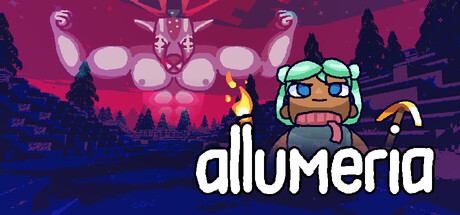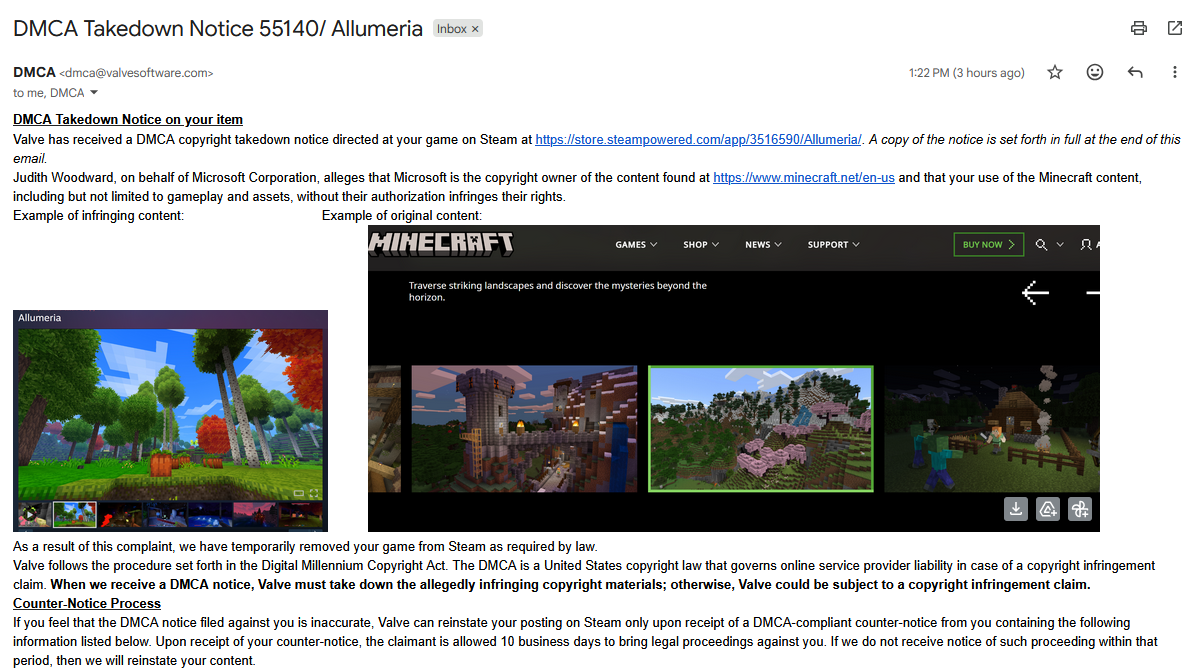
In June 2025, indie voxel sandbox game Allumeria was temporarily removed from Steam after Microsoft filed a Digital Millennium Copyright Act (DMCA) takedown notice against it. The claim, filed on behalf of Microsoft by Judith Woodward, alleged that Allumeria infringed on Minecraft's copyright by utilizing "Minecraft content, including but not limited to gameplay and assets," without proper authorization.
What Happened
Allumeria, developed by Unomelon, is a procedurally generated, first-person, voxel sandbox game. While inspired by Minecraft and Terraria, it features its own unique assets, advanced building tools, diverse cave systems, and boss battles.
The DMCA claim cited a specific screenshot from Allumeria's Steam page as evidence of the alleged infringement. As a result, Allumeria's Steam page was taken down, preventing players from accessing or purchasing the game.
Developer Response
Unomelon, the developer of Allumeria, took to Bluesky to publicly address the situation. They stated that the DMCA claim was "false" and expressed frustration over the sudden removal of their game from Steam.
AI-Powered Copyright Enforcement?
Multiple sources suggested that the DMCA claim was likely an automated action, possibly initiated by an AI-powered copyright enforcement service such as Tracer.AI. The service may have flagged Allumeria due to its visual similarities to Minecraft — a common issue with voxel-based games that share a similar art style but are otherwise original works.
This incident highlighted growing concerns about the use of automated systems for copyright enforcement, which can result in false positives that harm independent developers.
Resolution
Following significant public attention and backlash, Jens Bergensten (Mojang's chief creative officer) personally investigated the matter. After the investigation, Microsoft withdrew the DMCA claim.
Allumeria's Steam page was fully restored without the developer needing to file a counter-claim. Unomelon expressed relief but also criticized the potential harm that automated DMCA claims can inflict on independent game developers.
Impact on Indie Games
This incident became a cautionary tale about the dangers of automated copyright enforcement in the gaming industry. Key takeaways:
- Automated DMCA systems can mistakenly target games that share visual similarities but are original works
- Indie developers are particularly vulnerable to such claims, as Steam page removal can significantly impact sales and visibility
- Community support played a crucial role in bringing attention to the issue and pushing for a resolution
- The incident prompted broader discussions about reforming DMCA processes to better protect independent creators.